
- Shandong Loyal Industrial Co.,Ltd.
- Macaroni Production Machine Instant Noodle Machine Biscuit Making Machine
 English
 العربية
 Español
 Français
 Português
 Русский язык
 中文
中文
Home> Company News> The Evolution Instant Noodle Making Machine Technology

The Evolution Instant Noodle Making Machine Technology
2026-03-19 15:06:26
Introduction: The Evolution of Instant Noodle Making Machine Technology
The global instant noodle industry has undergone a remarkable transformation over the past few decades, driven largely by advancements in food processing machinery. At the center of this evolution is the development of the instant noodle line, which has revolutionized how noodles are produced on an industrial scale. From manual operations to fully automated systems, the technology behind noodle production has significantly improved efficiency, consistency, and food safety.
To clearly understand this transformation, it is essential to answer a fundamental question: how are instant noodles made in modern factories? Today, the process involves a highly integrated system that includes dough mixing, rolling, steaming, frying or drying, and packaging—all completed within a continuous and automated production line. This seamless process is made possible by advanced engineering and intelligent control systems embedded within the modern instant noodle line.

According to food engineering expert Dr. John Smith, “The automation of noodle production lines has not only increased output but also ensured consistent quality, which is critical for global food brands.” His insight highlights the importance of technological innovation in meeting the growing global demand for convenient and affordable food products.
As consumer demand continues to rise worldwide, manufacturers are increasingly investing in advanced machinery to stay competitive. The evolution of instant noodle making machine technology is not just a story of industrial progress—it is a reflection of how automation and innovation are reshaping the entire food manufacturing landscape.

Traditional Noodle Production vs Modern Automation
Before the introduction of advanced machinery, noodle production relied heavily on manual labor and simple mechanical tools. Traditional methods involved hand-mixing dough, manual rolling, and cutting processes, which were time-consuming and highly dependent on worker skill. In such systems, consistency in texture, thickness, and taste was difficult to maintain, making it challenging to scale production efficiently. This also limited the ability of manufacturers to respond to growing global demand, raising an important question in early industrialization stages: how are instant noodles made in a way that ensures both quality and efficiency?
The transition from manual production to mechanization marked a critical turning point in the industry. Early semi-automatic machines began to standardize key processes such as dough sheeting and cutting, reducing labor intensity and improving uniformity. However, these systems were still fragmented, requiring significant human intervention between stages. As food production demands increased, the need for a fully integrated solution became clear.
The emergence of the modern instant noodle line addressed these limitations by combining all production stages into a continuous, automated system. This innovation allowed manufacturers to streamline operations, significantly increase output, and maintain consistent product quality. According to Professor Michael Tan, a specialist in food processing engineering, “Automation bridges the gap between traditional craftsmanship and industrial efficiency, ensuring both scalability and product standardization.” His observation reflects the core advantage of modern production systems.

Today, automated instant noodle line technology minimizes human error, enhances hygiene standards, and enables precise control over every stage of production. Compared to traditional methods, modern automation not only improves productivity but also provides manufacturers with the flexibility to produce a wide variety of noodle types to meet diverse market preferences.
Key Milestones in Instant Noodle Machine Development
The evolution of instant noodle machinery has been marked by several key technological milestones that have transformed production from basic mechanization into highly automated industrial systems. These advancements not only improved efficiency but also provided a clearer answer to the question: how are instant noodles made in modern, large-scale factories. Each stage of development reflects progress in engineering, automation, and food processing technology.
One of the earliest milestones was the introduction of continuous production systems. Unlike batch processing, continuous systems allowed dough to move seamlessly through multiple stages without interruption. This innovation significantly increased output and laid the foundation for the modern instant noodle line, where all processes are connected in a single workflow. As noted by food machinery expert Dr. Alan Roberts, “Continuous processing is the backbone of industrial food production, enabling both speed and consistency.”

Another major breakthrough was the integration of steaming and frying technologies. Steaming ensures proper gelatinization of starch, while frying reduces moisture content and creates the characteristic texture of instant noodles. The ability to combine these processes into one automated system improved product quality and production efficiency. This advancement was crucial in standardizing global noodle production and answering industrial demands for consistency.
The development of non-fried drying technology marked another important step. With increasing consumer demand for healthier options, manufacturers began adopting hot air drying systems within the instant noodle line. This allowed producers to create low-fat alternatives without compromising shelf life or texture. According to Professor Li Cheng, “The shift toward non-fried processing reflects both technological innovation and changing consumer health awareness.”
High-speed and large-capacity production lines represent a more recent milestone. Modern instant noodle line systems can produce hundreds of thousands of servings per shift while maintaining strict quality control. These systems incorporate precision engineering, automated monitoring, and intelligent control technologies to optimize every stage of production.
Finally, the integration of digital control systems, such as PLC and real-time monitoring, has elevated automation to a new level. These technologies enable manufacturers to track performance, detect issues instantly, and ensure consistent product standards. As a result, the process of how are instant noodles made has become more precise, efficient, and scalable than ever before.
In summary, the key milestones in instant noodle machine development highlight a continuous journey of innovation—from basic mechanization to intelligent automation—driven by the need for efficiency, quality, and adaptability in the global food industry.
Types of Instant Noodle Production Lines
The diversity of modern production systems is a direct result of the technological evolution discussed earlier. Today, manufacturers can choose from a wide range of configurations depending on capacity, product type, and investment scale. Understanding these options not only helps optimize production but also provides a clearer picture of how are instant noodles made efficiently in different industrial settings.
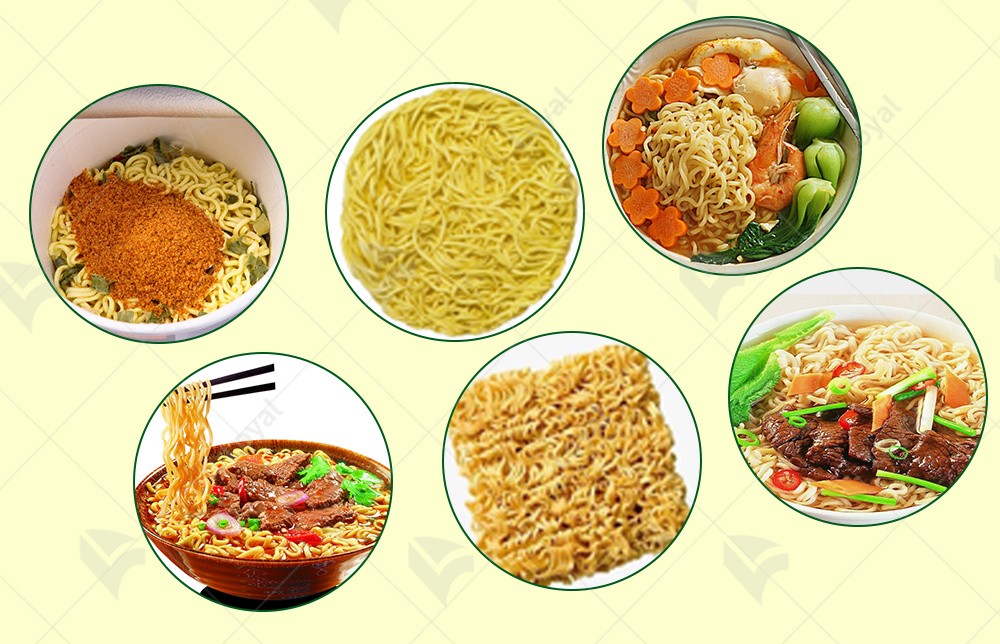
Classification by Production Capacity
Instant noodle production lines are typically divided into three main categories based on output:
Small-scale instant noodle line (30,000–60,000 pcs/8h)
Suitable for startups or regional manufacturers with limited investment and space.
Medium-scale instant noodle line (80,000–120,000 pcs/8h)
Ideal for growing businesses aiming to expand production while maintaining flexibility.
Large-scale instant noodle line (160,000–250,000 pcs/8h)
Designed for industrial-level production and export-oriented enterprises requiring high efficiency and continuous operation.
According to food machinery expert Dr. Kevin Zhou, “Selecting the right production capacity is critical, as it directly affects operational efficiency, energy consumption, and long-term profitability.” This highlights the importance of aligning machine selection with business goals.
Classification by Processing Method
Another important distinction lies in how noodles are processed:
Fried instant noodle line
Uses oil frying to dehydrate noodles, creating the traditional texture and flavor.
Non-fried instant noodle line
Uses hot air drying technology, offering a healthier alternative with lower oil content.
These variations demonstrate how the modern instant noodle line can adapt to changing consumer preferences while maintaining industrial efficiency.
Classification by Product Type
Production lines can also be customized based on packaging and product format:
Cup noodle production lines
Bagged noodle production lines
Multi-format integrated systems
This flexibility allows manufacturers to diversify their product range without investing in completely separate systems.

Instant Noodle Production Line Parameter Table
Below is a detailed comparison of different instant noodle line models, helping manufacturers better understand technical specifications and choose suitable equipment:
|
Device Model |
Yield (pcs/8h) |
Steam Consumption (kg/h) |
Factory Size (m) (L×W×H) |
Opening Width (mm) |
Installed Capacity (kW) |
Operators (2 people, without packaging) |
|
LYN-II 3Y |
30,000 |
1000–1200 |
60×6×4.5 |
216–260 |
42 |
4 |
|
LYN-II 6Y |
60,000 |
1200–1400 |
76×8×4.5 |
300–330 |
56 |
4 |
|
LYN-II 8Y |
80,000 |
1300–1500 |
76×8×4.5 |
420–450 |
68 |
6 |
|
LYN-II 10Y |
100,000 |
1400–1600 |
95×8×5.0 |
420–450 |
80 |
6 |
|
LYN-II 12Y |
120,000 |
1800–2000 |
95×8×5.0 |
510–550 |
83 |
6 |
|
LYN-II 16Y |
160,000 |
2000–2400 |
110×10×5.5 |
630–650 |
106 |
7 |
|
LYN-II 18Y |
180,000 |
2400–2600 |
110×10×5.5 |
720–730 |
114 |
7 |
|
LYN-II 20Y |
200,000 |
2600–2800 |
120×12×5.5 |
765–800 |
125 |
8 |
|
LYN-II 25Y |
250,000 |
3000–3200 |
120×12×5.5 |
870–900 |
140 |
8 |
Key Selection Insights
From the table, it is clear that as production capacity increases, so do energy requirements, factory size, and operational complexity. Smaller models are more cost-effective and easier to install, while larger systems offer higher output and better economies of scale.
In modern manufacturing, choosing the right instant noodle line is essential for optimizing efficiency and answering the practical question of how are instant noodles made at scale. The right configuration ensures not only smooth production but also long-term competitiveness in the global food industry.
In summary, the wide variety of instant noodle production lines available today allows manufacturers to tailor their operations precisely to market demands. By selecting the appropriate system, businesses can achieve the perfect balance between cost, capacity, and product quality.
Benefits of Technological Advancements
The continuous evolution of instant noodle making machine technology has brought significant benefits to the food manufacturing industry. These advancements have not only improved efficiency and productivity but also provided a clear and reliable answer to the question: how are instant noodles made in a modern, industrial environment. At the center of these improvements is the highly integrated instant noodle line, which combines automation, precision, and flexibility into a single system.

Increased Production Efficiency
One of the most notable advantages of technological advancement is the dramatic increase in production efficiency. Modern instant noodle line systems operate continuously with minimal human intervention, allowing manufacturers to produce large volumes within a short time. Automated processes ensure that each stage—from mixing to packaging—is optimized for speed and accuracy.
According to food processing expert Dr. Michael Lee, “Automation enables manufacturers to achieve consistent high output while reducing operational variability, which is essential in large-scale food production.” This highlights how advanced machinery directly contributes to industrial efficiency.
Improved Product Consistency and Quality
Consistency is critical in food production, especially for globally recognized products like instant noodles. Advanced control systems within the instant noodle line ensure precise regulation of temperature, pressure, and processing time. This guarantees uniform noodle texture, taste, and appearance across every batch.
By standardizing the production process, manufacturers can confidently answer how are instant noodles made with a focus on repeatable quality, which is essential for brand reliability and consumer satisfaction.
Reduced Labor and Operational Costs
Technological innovation has significantly reduced the need for manual labor. Automated systems handle complex tasks that previously required multiple workers, lowering labor costs and minimizing human error. In addition, energy-efficient designs help reduce utility expenses, making the instant noodle line more cost-effective over time.
As noted by industrial engineer Professor David Chen, “Investing in automation may require higher initial capital, but the long-term savings in labor and energy make it economically advantageous.”
Enhanced Food Safety and Hygiene
Modern food machinery is designed with strict hygiene standards in mind. Stainless steel construction, enclosed production environments, and automated handling reduce the risk of contamination. These features ensure that the production process aligns with international food safety regulations.
This advancement strengthens consumer trust and provides a safer, more controlled answer to how are instant noodles made in today’s factories.
Greater Flexibility and Scalability
Another key benefit is the flexibility offered by modern systems. A single instant noodle line can be customized to produce various types of noodles, including fried, non-fried, cup, and bagged products. Modular designs also allow manufacturers to expand production capacity as demand grows.
This scalability ensures that businesses can adapt quickly to market changes without significant additional investment.
Environmental and Energy Efficiency Improvements
With increasing global focus on sustainability, modern machines are designed to reduce energy consumption and waste. Heat recovery systems, optimized frying processes, and efficient drying technologies all contribute to a more environmentally friendly instant noodle line.
These improvements not only lower operational costs but also help manufacturers meet environmental regulations and sustainability goals.
Conclusion
In summary, technological advancements in instant noodle machinery have transformed the industry by improving efficiency, quality, and sustainability. The modern instant noodle line enables manufacturers to produce high-quality products at scale while reducing costs and ensuring food safety.
As innovation continues, the process of how are instant noodles made will become even more efficient and intelligent, further strengthening the role of automation in the future of food manufacturing.
References
The following are five authoritative foreign literature websites in the field of industrial microwaves:
1. IEEE Xplore Digital Library
Website: [https://ieeexplore.ieee.org/]
2.ScienceDirect
Website: [https://www.sciencedirect.com/]
3. SpringerLink
Website: [https://link.springer.com/]
4. Wiley Online Library
Website: [https://onlinelibrary.wiley.com/]
5. PubMed
Website: [https://pubmed.ncbi.nlm.nih.gov/]
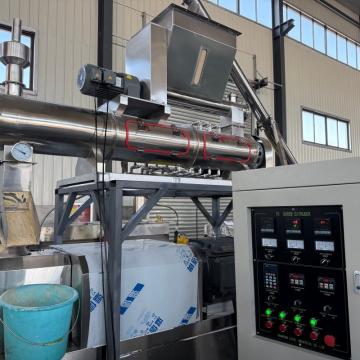 modified starch production line
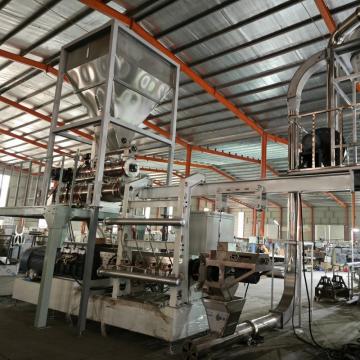 Textured Protein Production Line
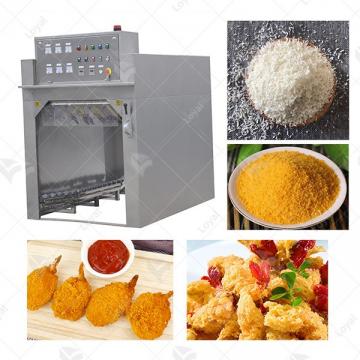 Commercial Japanese Panko Bread Crumb Grinder Machine
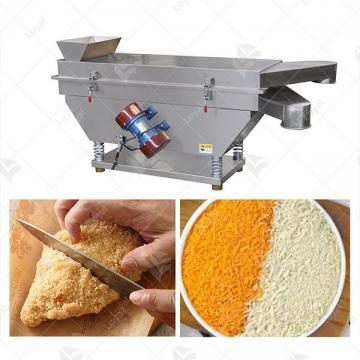 Japanese Bread Crumbs Processing Line